
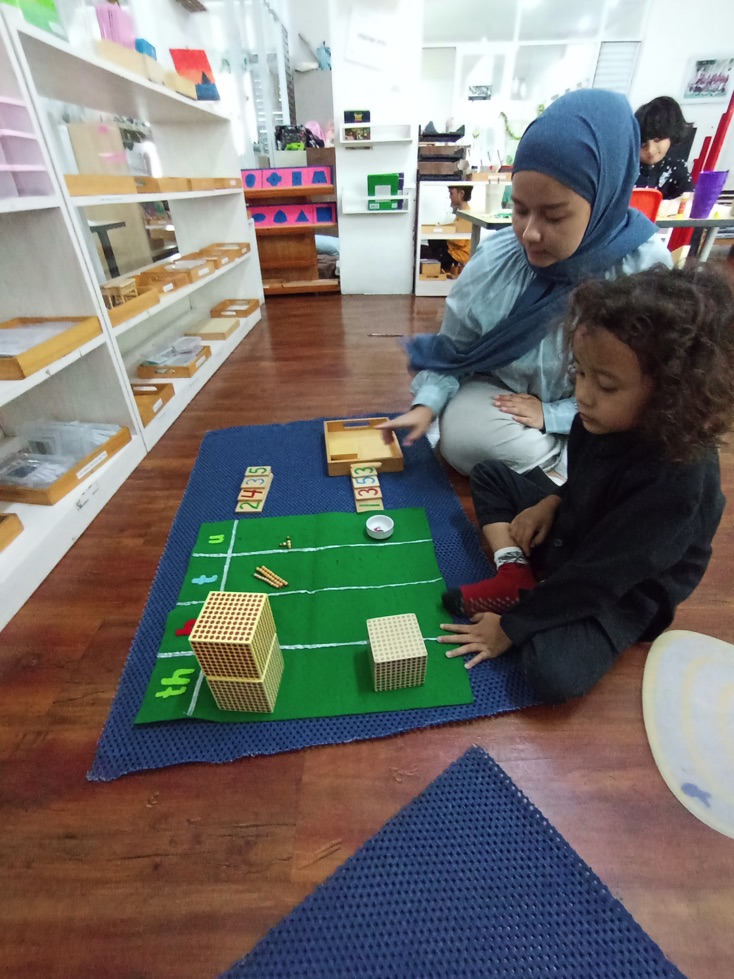
Sekolah Montessori Bandung, In our vibrant city where Sundanese traditions meet modern Indonesian life, we’re raising children who’ll inherit a world more interconnected than ever. How do we prepare them not just to navigate diverse cultures, but to cherish and contribute to them? At the heart of authentic Montessori education lies a powerful secret: Cultural Zones – dynamic classroom spaces where music, art, and literature become passports to global understanding.
Beyond Maps and Flags: The Living Heart of Cultural Education
Traditional “culture lessons” often focus on surface facts: famous landmarks, traditional costumes, or national dishes. Montessori goes deeper. As Dr. Maria Montessori observed: “The child is both a hope and a promise for mankind.” Cultural Zones transform that promise into practice by nurturing:
- Curiosity about differences
- Respect for diverse expressions
- Belonging to a shared humanity
At Pascal Montessori, you’ll find children mesmerized by Balinese gamelan melodies, creating batik-inspired watercolors, or reenacting Japanese folktales—not as “lessons,” but as natural extensions of their daily exploration.
The Three Pillars of Cultural Zones
1. Music: The Universal Language
- Montessori Approach:
Children explore instruments from global traditions (angklung, African djembe, Tibetan singing bowls). Rhythm games teach mathematical patterns while folk songs spark discussions about emotions across cultures. - Bandung Connection:
A child compares Sundanese kacapi suling with West African kora music, discovering how both use pentatonic scales to tell stories. - Life Lesson:
“When we dance to unfamiliar beats, we learn our hearts speak the same language.”
2. Art: Windows to Worldviews
- Montessori Approach:
Shelves display art materials from diverse traditions: Indian block printing, Aboriginal dot painting, Javanese shadow puppetry. Children create without imitation—exploring how cultures express meaning. - Bandung Connection:
After studying Mexican alebrijes (spirit animals), children design their own creatures using Parahyangan forest motifs. - Life Lesson:
“Every culture’s art answers: What does it mean to be human?”
3. Literature: Walking in Others’ Shoes
- Montessori Approach:
Real-life stories replace stereotypes: A Japanese child’s school day, a Maasai grandmother’s wisdom, a Peruvian boy’s market adventure. Felt maps and artifacts make places tangible. - Bandung Connection:
Reading “Satu Hari di Pasar” leads to role-playing traditional markets from Yogyakarta to Marrakech. - Life Lesson:
“When a Bandung child laughs at an Inuit folktale’s mischief, they discover shared childhoods.”
Why Cultural Zones Matter for Bandung’s Children
Building “World-Ready” Skills
| Cultural Activity | Developed Skill | Future Impact |
| Comparing folktales | Critical thinking | Media literacy |
| Cooperative art | Cross-cultural collaboration | Global teamwork |
| Music improvisation | Creative adaptation | Innovation in diversity |
Research shows children in multicultural environments:
- Develop 40% higher empathy (CASEL)
- Show greater cognitive flexibility (Harvard Study)
- Become problem-solvers in diverse teams (WEF Future of Jobs)
Rooted in Indonesian Values
Cultural Zones embody Bhinneka Tunggal Ika (Unity in Diversity):
- Sundanese puppet stories sit beside Nigerian fables
- Arabic calligraphy materials neighbor Balinese script
- Children learn: “Our traditions are unique—and so are others’”
Bringing the World Home: 3 Simple Steps
- “Music Mondays”:
Play global lullabies during bedtime. Discuss: *”How does this Korean song feel different from our “Bubuy Bulan”?” - Artifact Exploration:
Display a family heirloom (grandma’s sarung, Chinese tea set) and share its story. - Story Swaps:
Host playdates where families share folktales from their heritage.
The Pascal Montessori Approach: Where Bandung Meets the World
At schools embracing authentic Montessori like Pascal Montessori, Cultural Zones aren’t corners—they’re the classroom’s heartbeat:
- Real Artifacts, Not Reproductions:
Children handle Tibetan prayer wheels, Japanese origami papers, and Dayak woven baskets. - Local Guides, Global Perspectives:
Grandparents teach Batik techniques; expat parents share holiday traditions. - From Observation to Action:
Studying Brazilian rainforest art sparks a class project on Citarum River conservation.
As one Pascal parent noted: “My daughter now greets our Nigerian neighbor with ‘Good morning’ in Yoruba. That small moment gave me hope for humanity.”
The Ripple Effect: Raising Architects of a Kinder World
Children nurtured in Cultural Zones become:
- Bridge-Builders who dissolve “us vs. them” thinking
- Curious Explorers who see difference as an invitation
- Ethical Innovators who design solutions for global challenges
In Dr. Montessori’s words: “Establishing lasting peace is the work of education.”
“In a Bandung Cultural Zone, a child holding a Ghanaian drum
learns the same truth as one folding a Japanese origami crane:
Our creativity is unique, but our wonder is universal.”
Experience World-Centered Learning
See how Montessori Cultural Zones nurture globally minded children in Bandung.
Learn more: www.pascalmontessori.sch.id

Testing
Comments are closed