Child-Centered Learning
Children are encouraged to explore meaningful activities according to their developmental needs and readiness.

A nurturing Montessori environment where young children explore, build independence, and discover the joy of learning at their own pace.

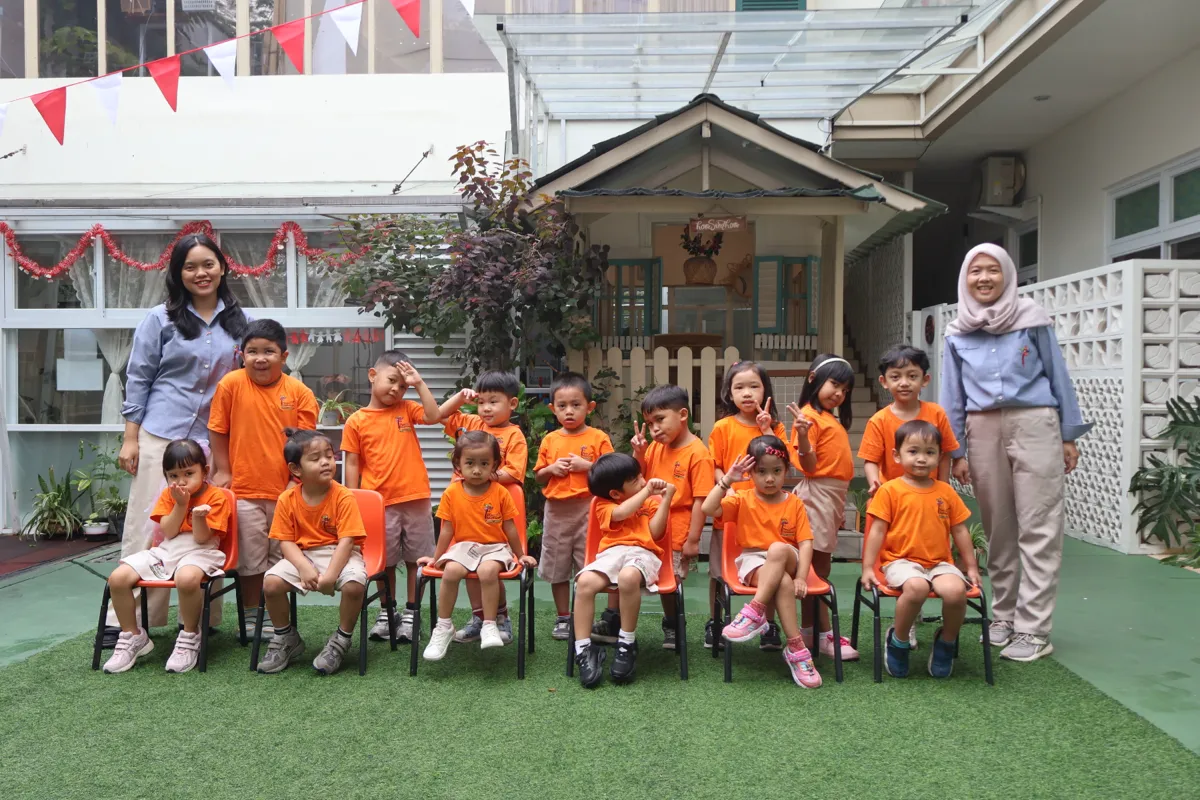
The early years are a time of extraordinary growth, discovery, and possibility.
In these formative years, children are discovering how to move, communicate, make choices, solve problems, and relate to the world around them. At Pascal Montessori, the environment is thoughtfully prepared to give every child meaningful opportunities to practise these abilities with growing independence.
Rather than expecting every child to develop in the same way or at the same speed, we give children time to explore, repeat, concentrate, and build confidence through purposeful experiences, caring guidance, and everyday moments of Grace & Courtesy.
Foundations We Nurture
Montessori learning begins with careful observation, purposeful environments, and deep respect for how each child grows, explores, and develops through meaningful experience.
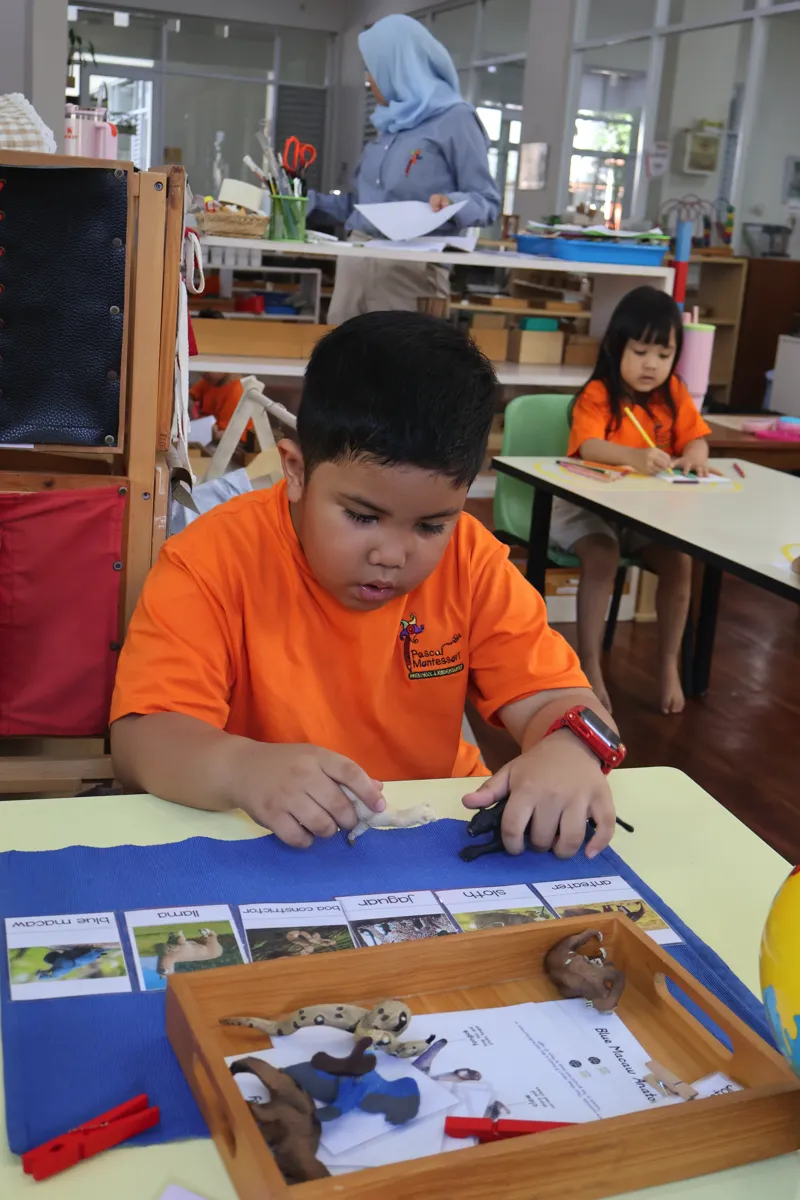
Children are encouraged to explore meaningful activities according to their developmental needs and readiness.
The environment responds to important developmental windows for language, movement, order, sensory exploration, and other abilities.
Materials, furniture, routines, and spaces are intentionally organised so children can participate independently.
Teachers observe, introduce activities, and provide support while allowing children space to discover and practise.
Our Montessori curriculum brings together five interconnected learning areas that help children develop independence, coordination, communication, reasoning, curiosity, and a deeper understanding of the world around them.
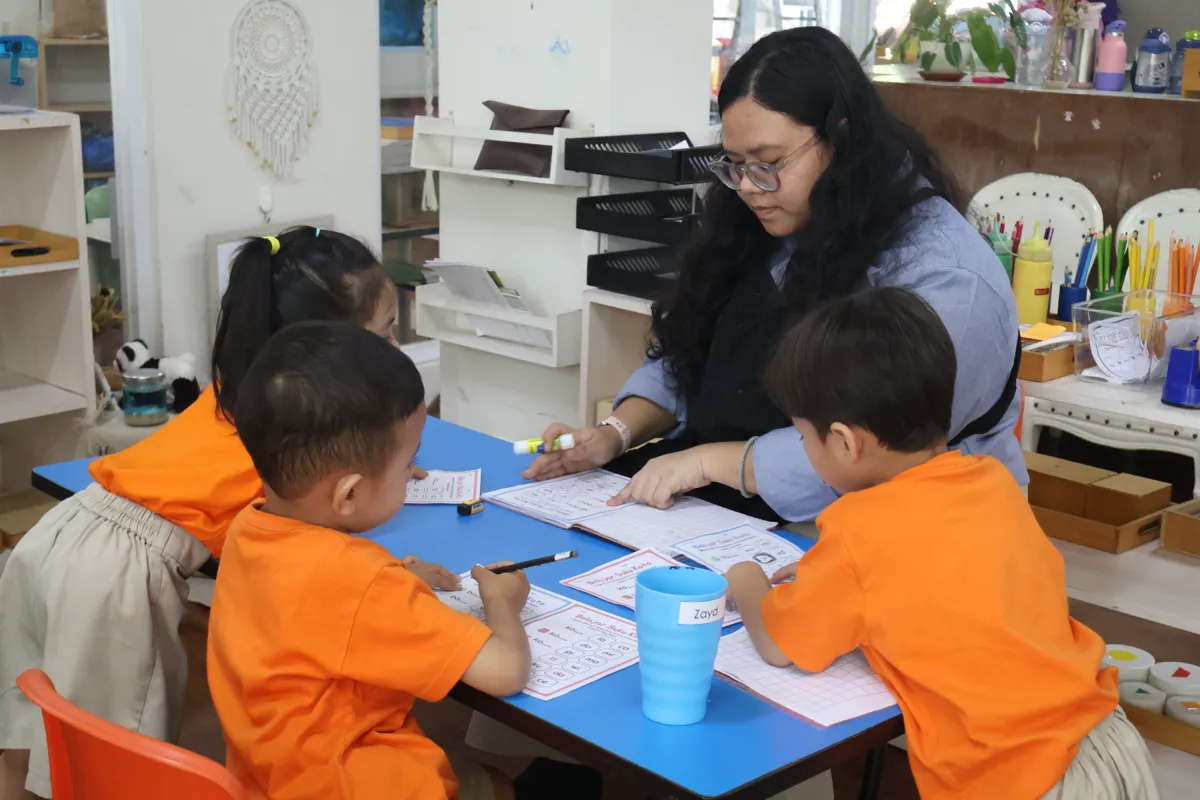
Children learn by doing, repeating, exploring, and discovering.
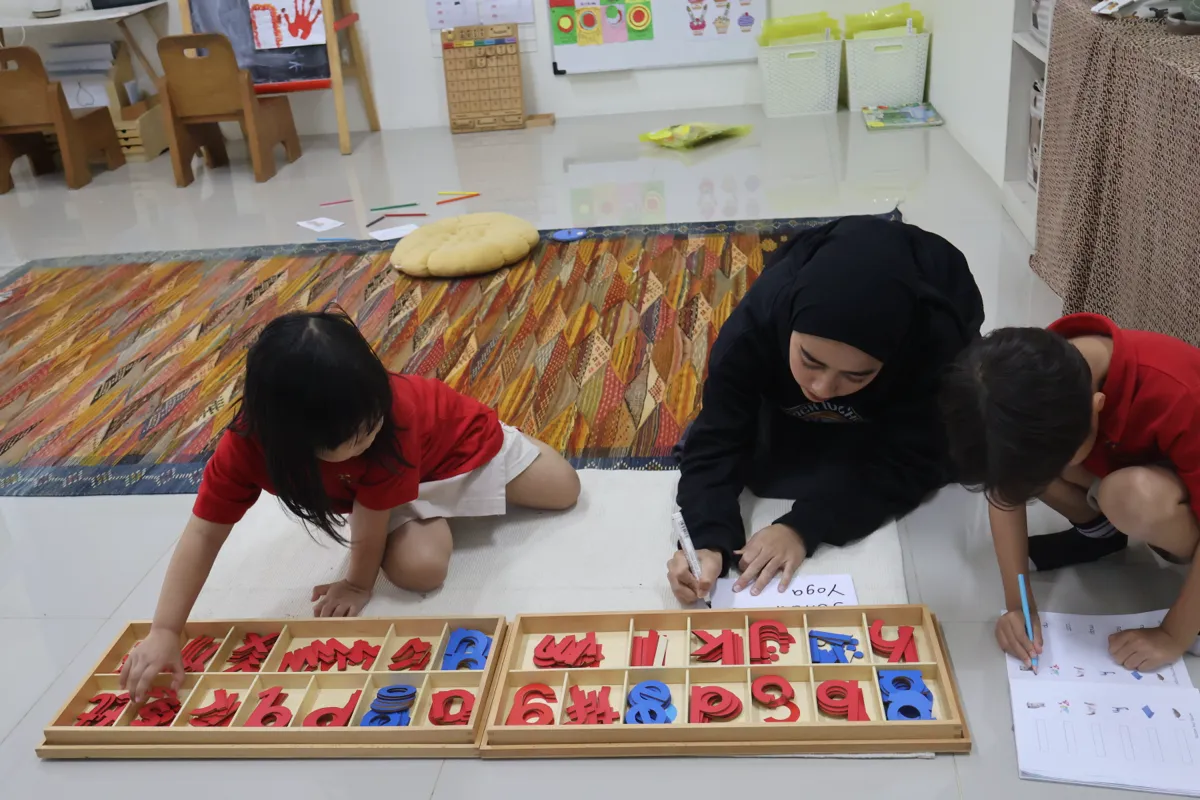
Meaningful experiences create foundations for deeper understanding.
Each area supports a different dimension of development, while working together as one integrated Montessori learning experience.
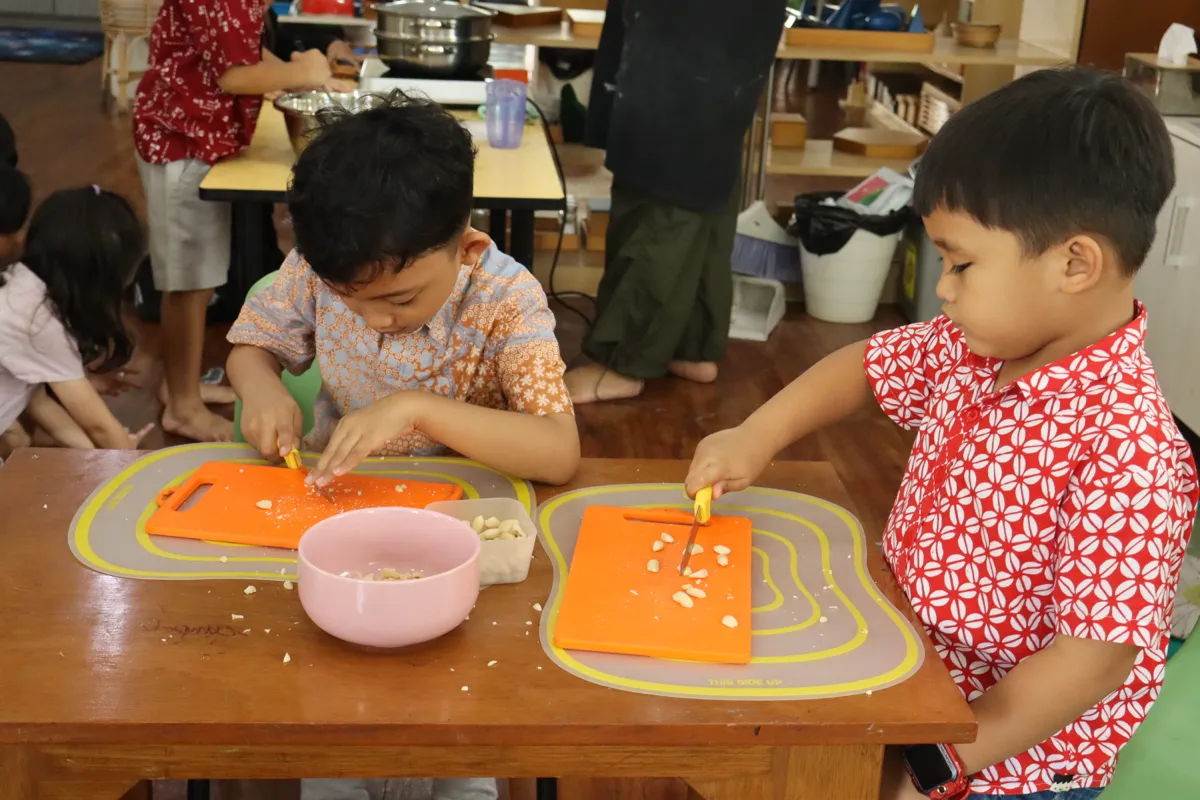
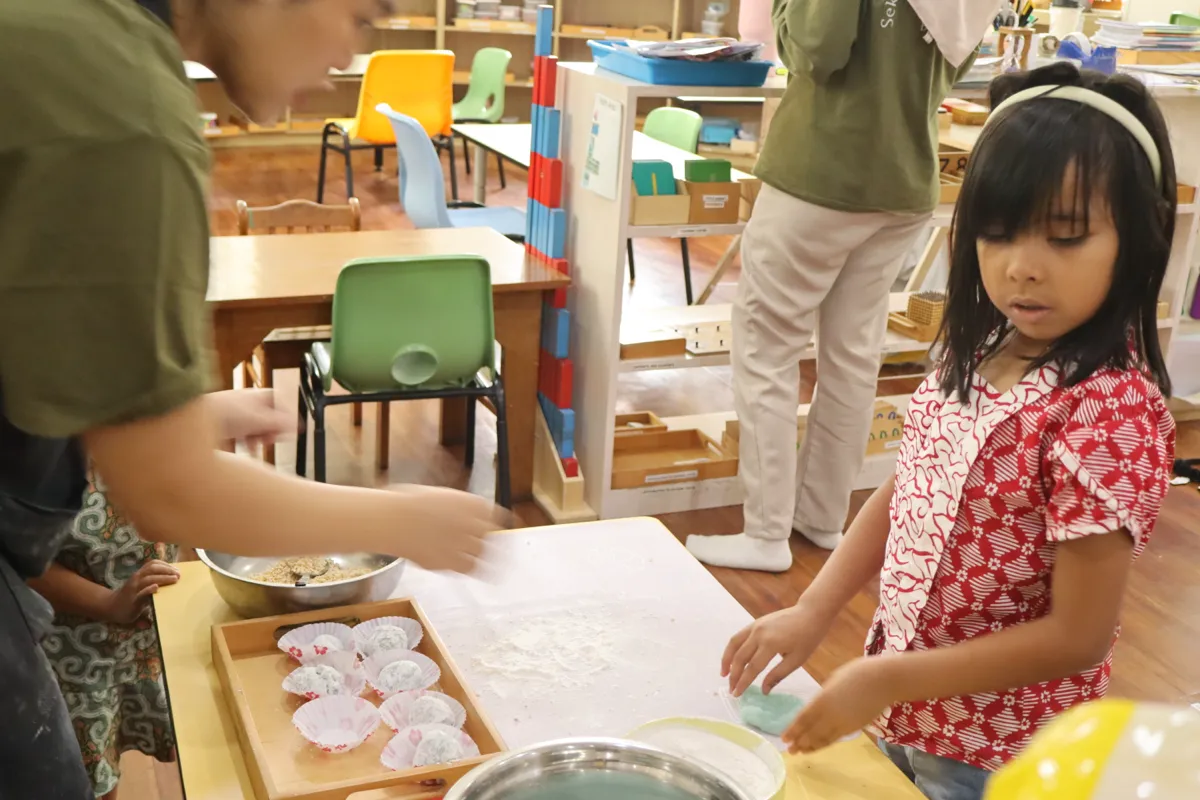
Everyday activities help children develop independence, concentration, coordination, and a growing sense of responsibility.
Carefully designed materials refine the senses and build foundations for observation, classification, comparison, and reasoning.
Hands-on materials help children experience quantity, number, sequence, and mathematical relationships before moving toward abstract concepts.
Children strengthen communication and vocabulary while developing phonetic awareness and progressing naturally toward reading and writing.
Children explore science, geography, nature, history, and the wider world, nurturing curiosity and a meaningful connection with their environment.
Children move from concrete experience toward deeper understanding, building knowledge through exploration, repetition, concentration, and discovery.
Each school day offers a thoughtful balance of focused Montessori work, self-care, movement, exploration, creativity, and meaningful interaction with others.
Circle time and gentle preparation help children settle into the classroom, reconnect with the community, and begin the day with purpose.
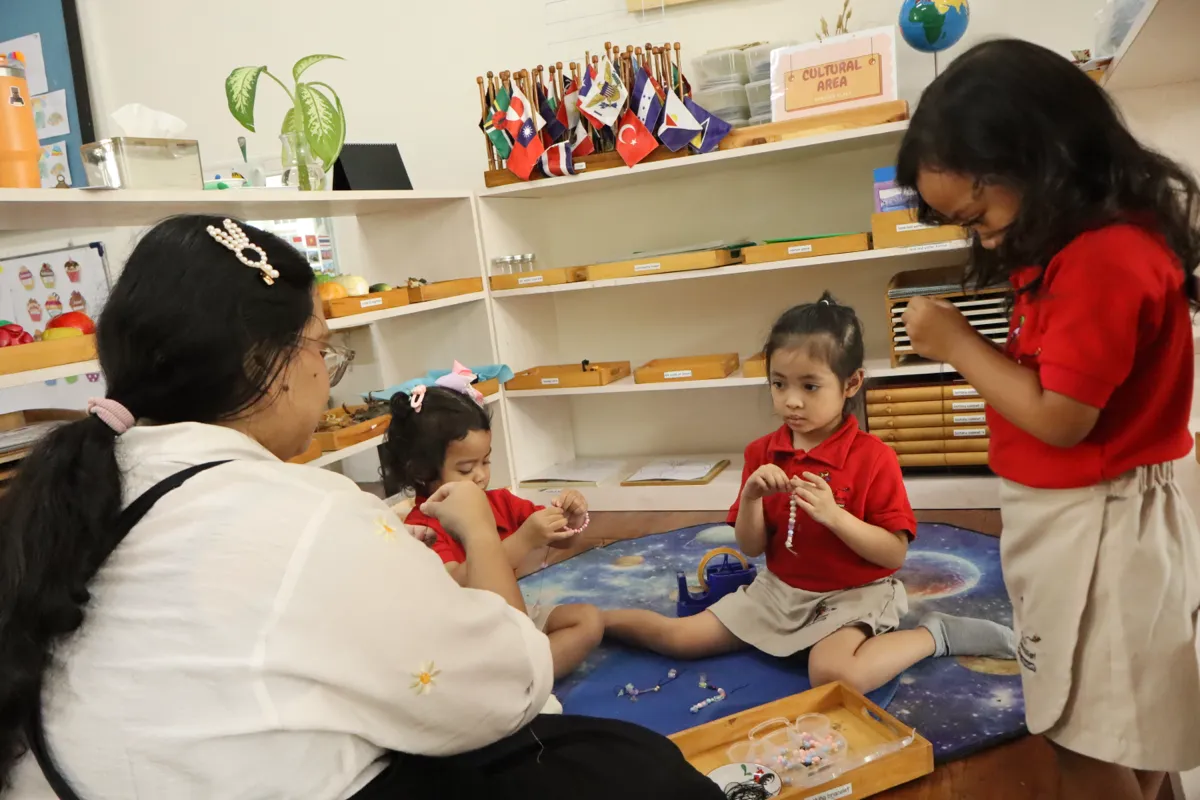
Children engage in focused, self-directed learning with Montessori materials while teachers observe, guide, and introduce activities when appropriate.
Meal time, personal care, brushing teeth, cleaning up, and practical responsibilities become meaningful opportunities to practise independence.
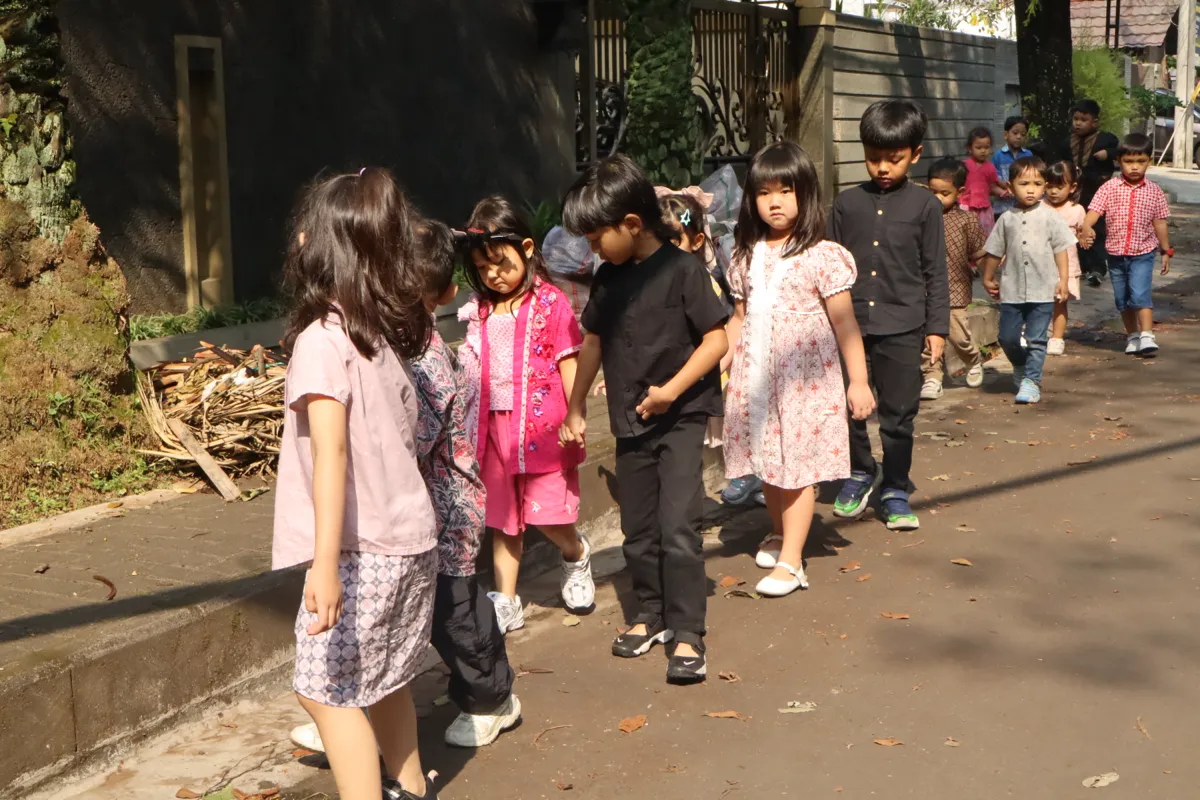
Movement, physical exercise, music, Nature Walk, art and craft, science experiments, and library experiences broaden children's learning throughout the week.
Everyday interactions help children practise respect, responsibility, patience, kindness, and care for other people and their environment.
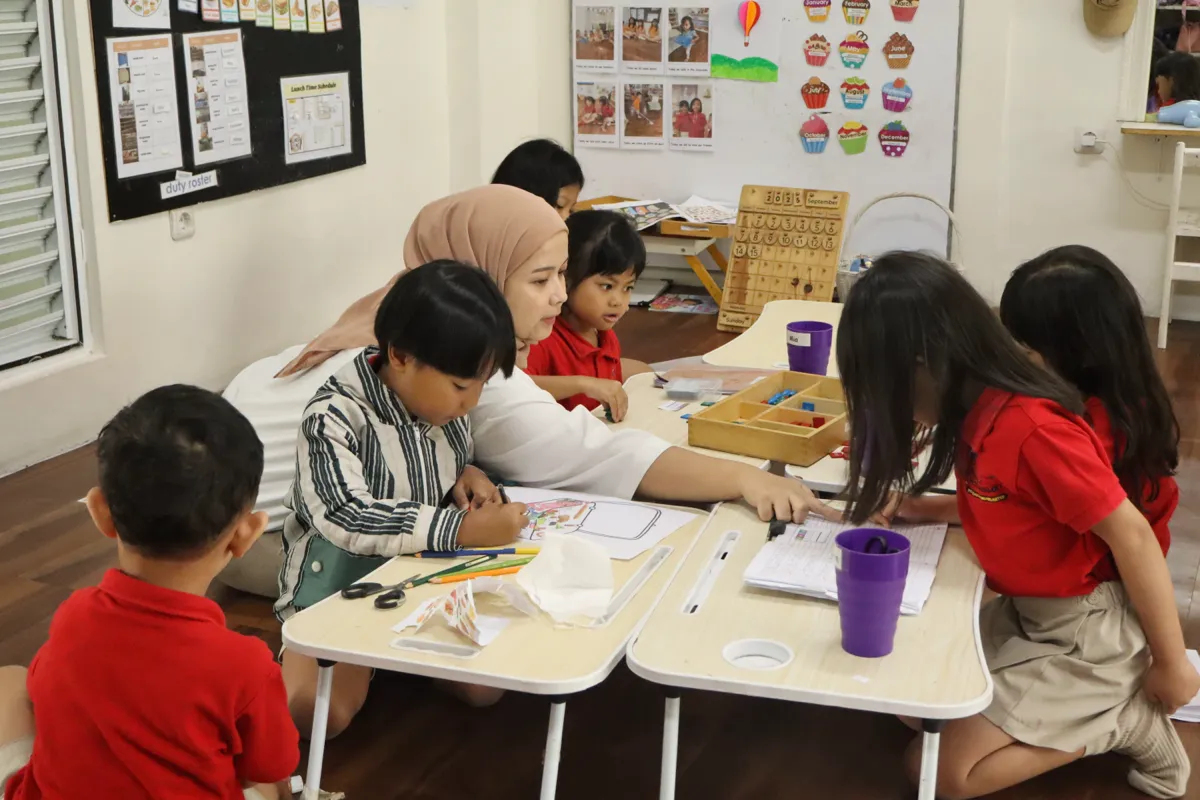

In a Montessori classroom, the adult does not simply deliver lessons. The guide watches carefully, understands readiness, and supports learning at the right moment.
Our educators create conditions in which children can explore, practise, make choices, solve problems, and gradually take greater ownership of their learning. Support is available when it is needed, while children are also given the time and space to discover what they can do for themselves.
Careful observation helps educators understand a child's interests, readiness, concentration, and emerging needs.
Activities and materials are introduced thoughtfully, giving children a clear starting point for independent exploration.
Children are given time to repeat, practise, concentrate, and develop confidence without unnecessary pressure to move faster.
A child's growth is strengthened when home and school understand one another. We value open communication and meaningful partnership with parents so children experience consistent encouragement, trust, and respect across the environments that matter most to them.
Everyday moments of concentration, discovery, independence, creativity, and connection.