
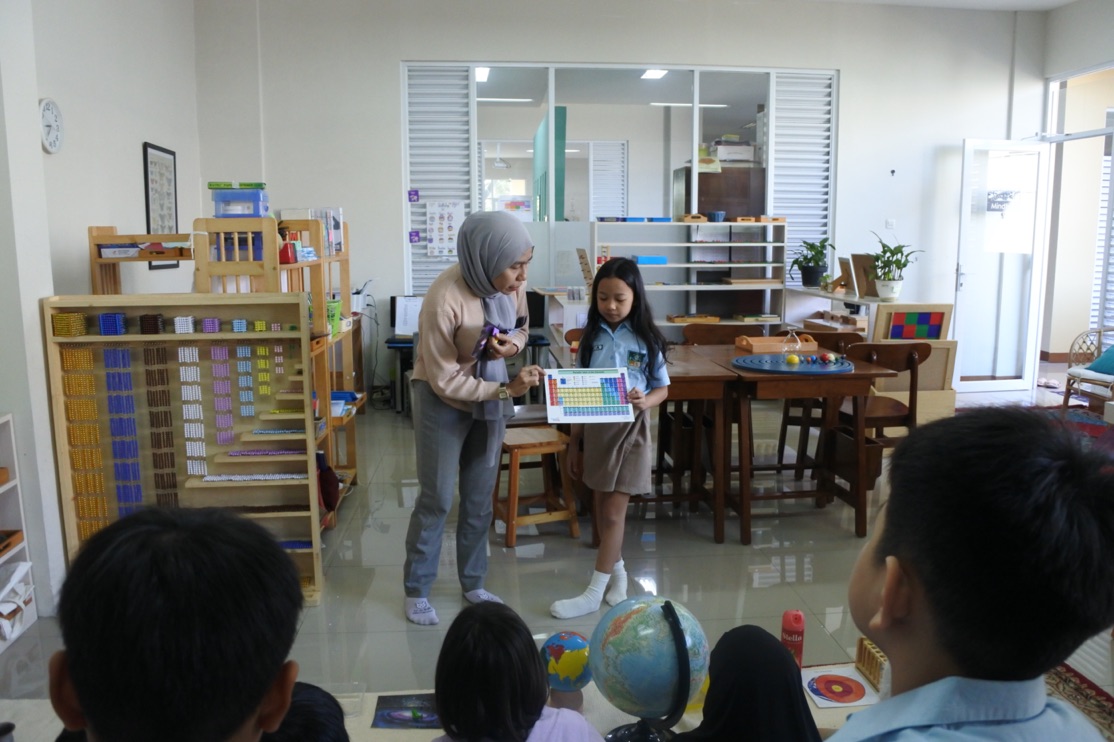
In traditional education, mistakes are often met with correction or penalties, fostering fear of failure. In the Montessori philosophy, however, mistakes are celebrated as essential teachers, guiding children toward growth and understanding. At Pascal Montessori School, error control is a deliberate practice, designed to empower children to learn from their missteps in a safe, supportive environment, aligning with Dr. Maria Montessori’s belief that “the child’s development follows a path of successive stages of independence.” This article explores why mistakes are valuable in Montessori, how Pascal Montessori integrates error control, and how this approach transforms parents’ views on failure, fostering resilience and confidence in children.
Montessori views mistakes as natural steps in the learning process, reflecting a child’s active engagement with their environment. Maria Montessori observed that children learn best when they can experiment, fail, and try again, developing problem-solving skills and a growth mindset. Unlike traditional systems that prioritize correct answers, Montessori focuses on the process, valuing effort and exploration over perfection. This perspective shifts failure from a negative outcome to a positive opportunity for discovery.
At Pascal Montessori School, error control is embedded in the design of materials and classroom practices. Montessori materials are self-correcting, allowing children to identify and fix mistakes independently. For example, the Knobbed Cylinders require precise fitting into corresponding holes; if a cylinder doesn’t fit, the child tries again, learning through trial and error without adult intervention. Similarly, the Pink Tower’s cubes only stack correctly in size order, providing immediate feedback that guides the child to adjust their approach. These materials teach children that mistakes are part of learning, not a cause for shame.
Teachers at Pascal Montessori play a crucial role, guiding children through mistakes with respect and encouragement. When a child spills water while pouring, the teacher might say, “Let’s clean it up together and try again,” modeling problem-solving and resilience. This approach ensures children feel safe to take risks, knowing that errors are opportunities to learn. Teachers also observe closely, offering support only when needed, allowing children to develop independence and confidence in their ability to overcome challenges.
The classroom environment further supports error control by fostering a culture of respect and collaboration. In mixed-age settings, older children often assist younger ones with tasks, such as correcting a misstep in a practical life activity like folding cloths. This peer support normalizes mistakes, as children see that everyone learns through trial and error. At Pascal Montessori, this dynamic builds a community where effort is celebrated, and failure is viewed as a natural part of growth.
The benefits of learning from mistakes are profound. Cognitively, it enhances critical thinking and problem-solving. When a child adjusts their approach after a mistake, like rearranging the Spindle Box’s contents, they strengthen analytical skills, learning to evaluate and adapt. Emotionally, it builds resilience and self-esteem. Overcoming a challenge, such as mastering a puzzle after multiple attempts, instills a sense of accomplishment that boosts confidence. Socially, it fosters empathy, as children learn to support peers through their own mistakes, creating a compassionate classroom culture.
Long-term, a positive view of mistakes prepares children for life’s challenges. Research shows that children with a growth mindset—believing abilities can improve through effort—are more resilient, adaptable, and successful in academics and careers. In Indonesia, where academic pressure can create fear of failure, Pascal Montessori’s approach offers a transformative perspective, equipping children to embrace challenges with courage and curiosity.
The school engages parents to shift their views on failure through workshops and newsletters. Parents learn to celebrate effort over perfection, using phrases like, “I love how you kept trying!” They’re also guided to create home environments that support error control, such as providing child-safe tools for tasks like pouring, where spills are opportunities to learn. These efforts align school and home practices, reinforcing the value of mistakes.
Challenges include parents’ ingrained beliefs that mistakes reflect inadequacy. Pascal Montessori counters this by sharing success stories, like a child mastering a complex material after persistent effort, demonstrating the power of error control. Another challenge is ensuring children don’t become discouraged by repeated mistakes. Teachers tailor support, offering simpler tasks to build confidence before progressing, ensuring a positive learning experience.
In conclusion, mistakes are the best teacher in the Montessori philosophy, guiding children toward independence and resilience. At Pascal Montessori School, error control transforms failure into opportunity, fostering cognitive, emotional, and social growth. By empowering children to learn from their missteps, the school prepares them for a world that values perseverance and innovation, embodying Maria Montessori’s vision of education as a journey of self-discovery.

Testing
Comments are closed